CREATIVE DIRECTION
POSTER DESIGN
RESEARCH & CONCEPT
GRAPHIC DESIGN
BRIEF
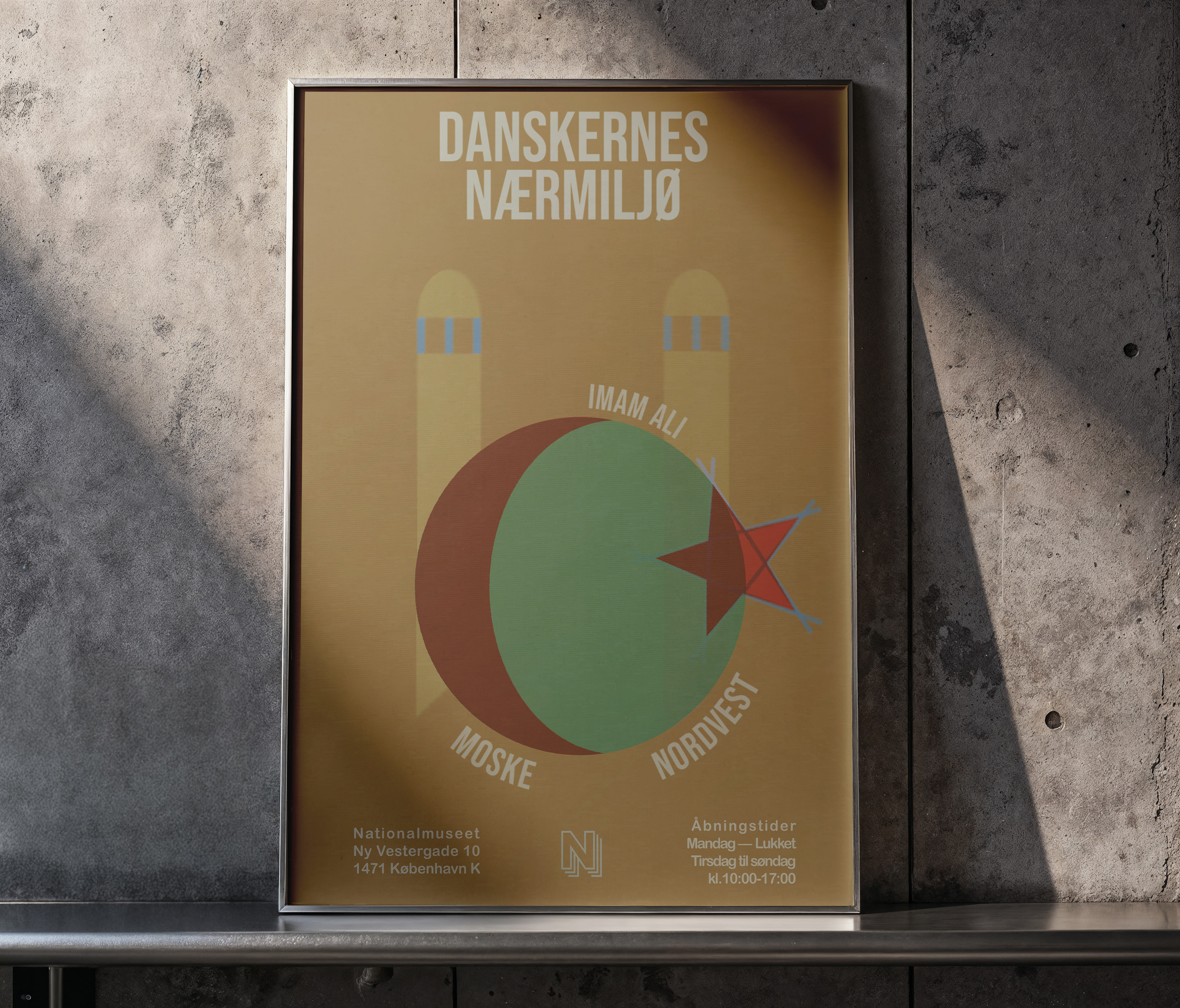
An exhibition poster for the National Museum of Denmark, for a show documenting the everyday environments of Danish citizens — buildings, places, memories.
Task. Choose a place in my own neighbourhood and render it for a national institution.
Idea. The Imam Ali Mosque in Nordvest is a neighbour, not a subject. The poster assumes its place in Danish everyday life rather than arguing for it, and renders it in the modernist vocabulary — De Stijl, Bauhaus, Swiss Style, Moholy-Nagy — that a national museum takes as given. The ornament and Arabic script are left alone; abstraction to crescent, star and minaret is a form of respect, not a style choice.
PROCESS
Aesthetic research
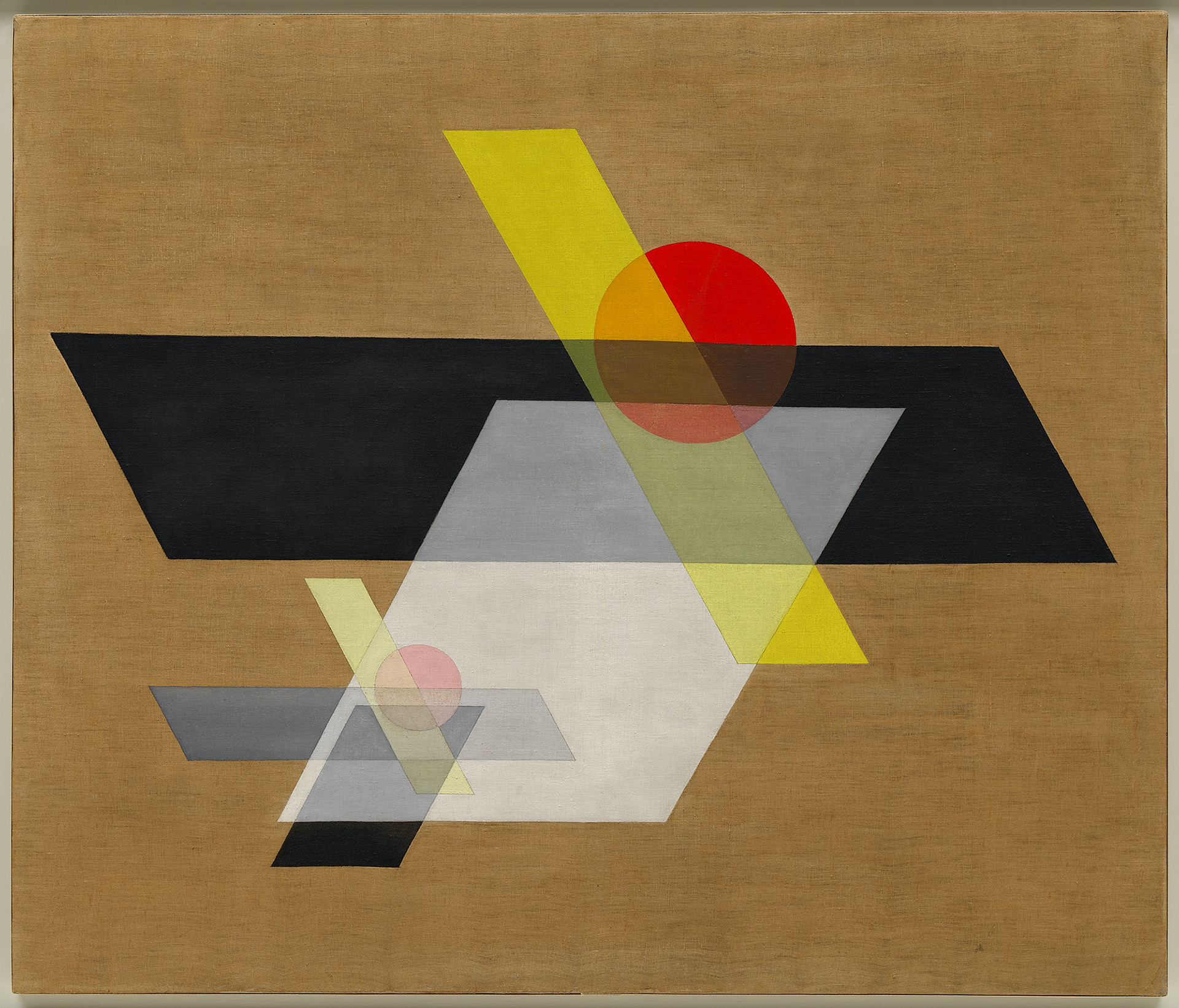
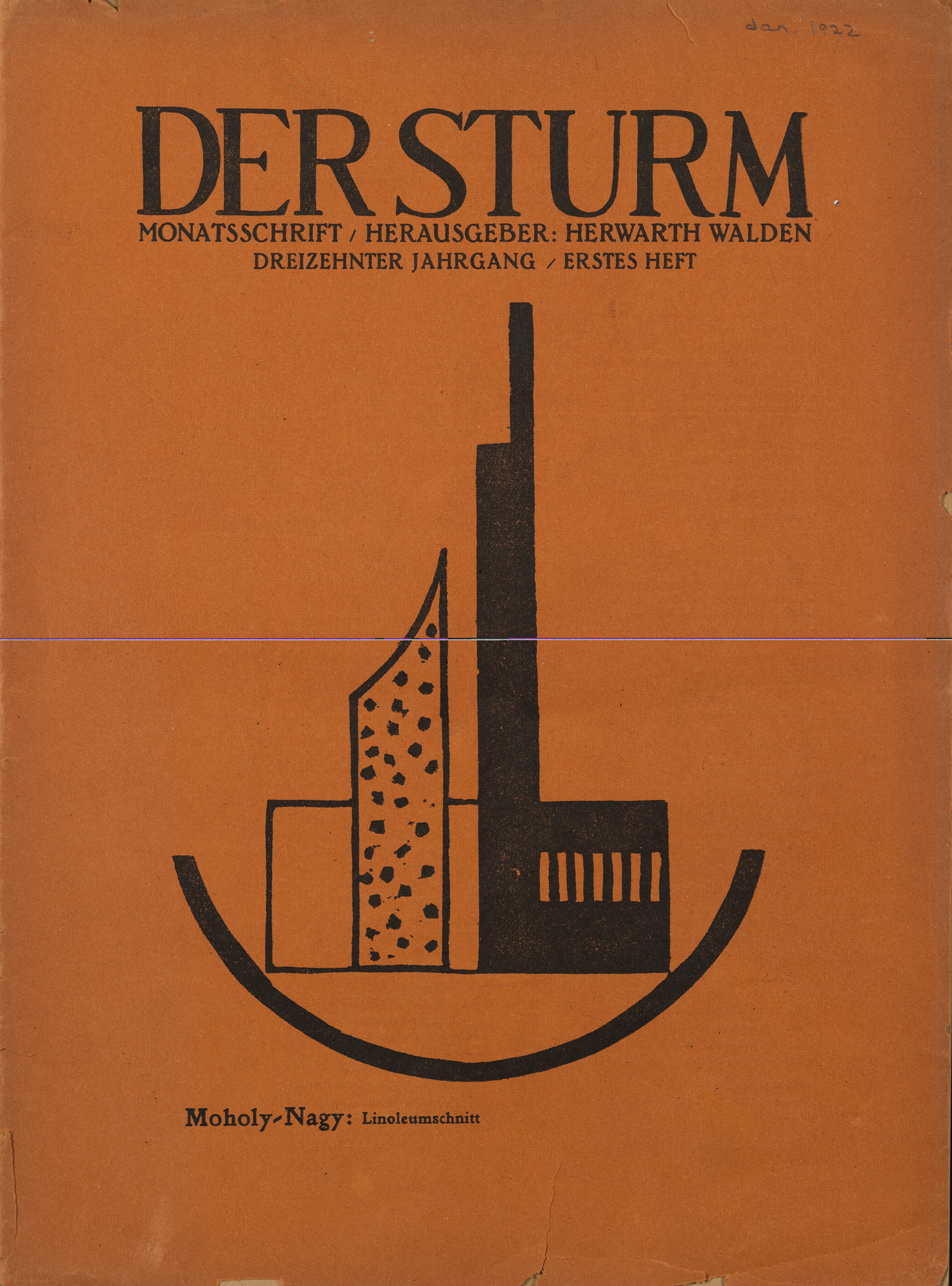
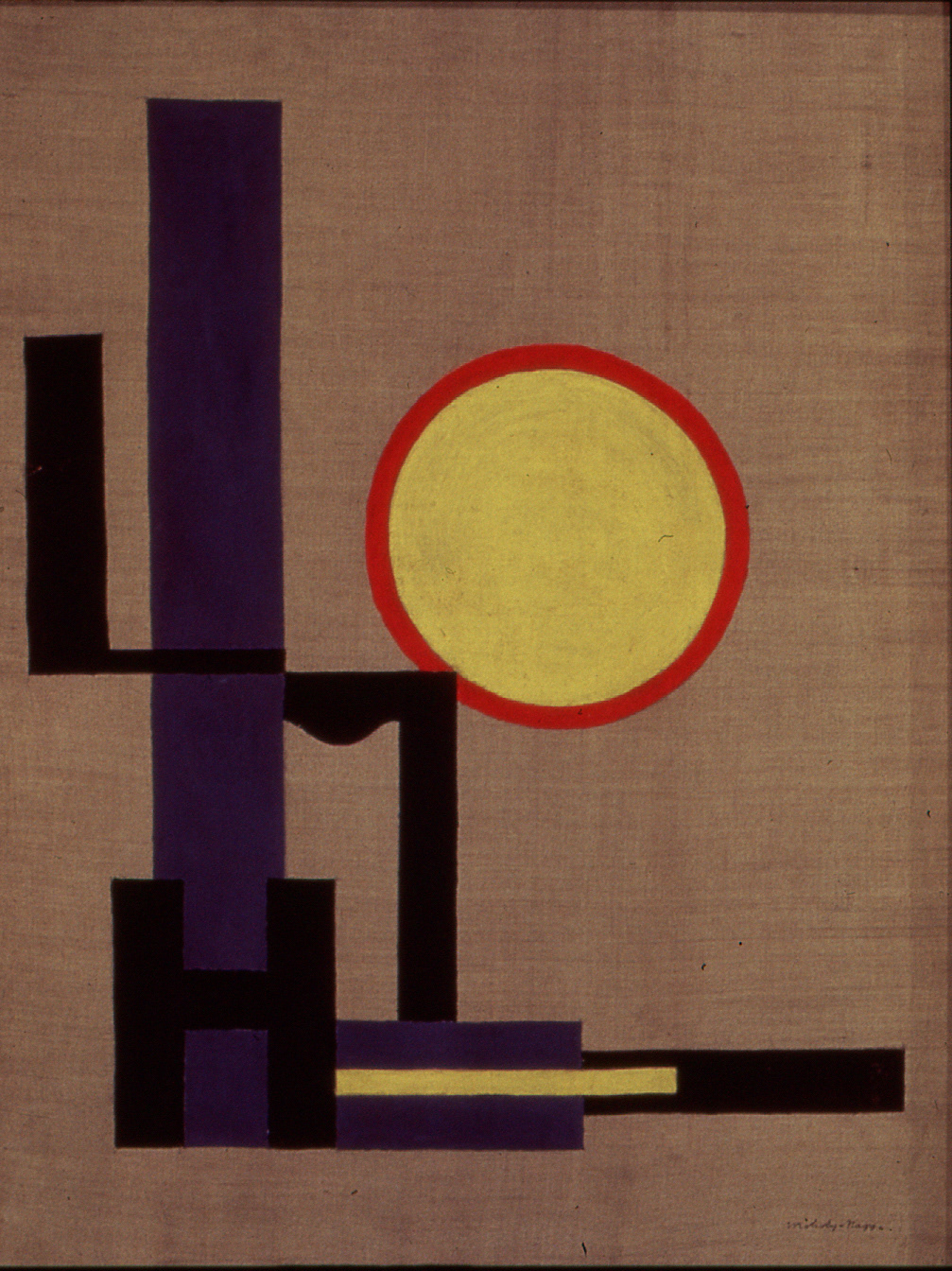
De Stijl, Bauhaus, Swiss Style and László Moholy-Nagy — abstraction, geometry, flat planes, and a strict visual system. Moholy-Nagy carried the most weight: his compositions have a roughness to them, sometimes almost hand-painted, that points back to the printing methods of the period the movements came out of.

Fieldwork
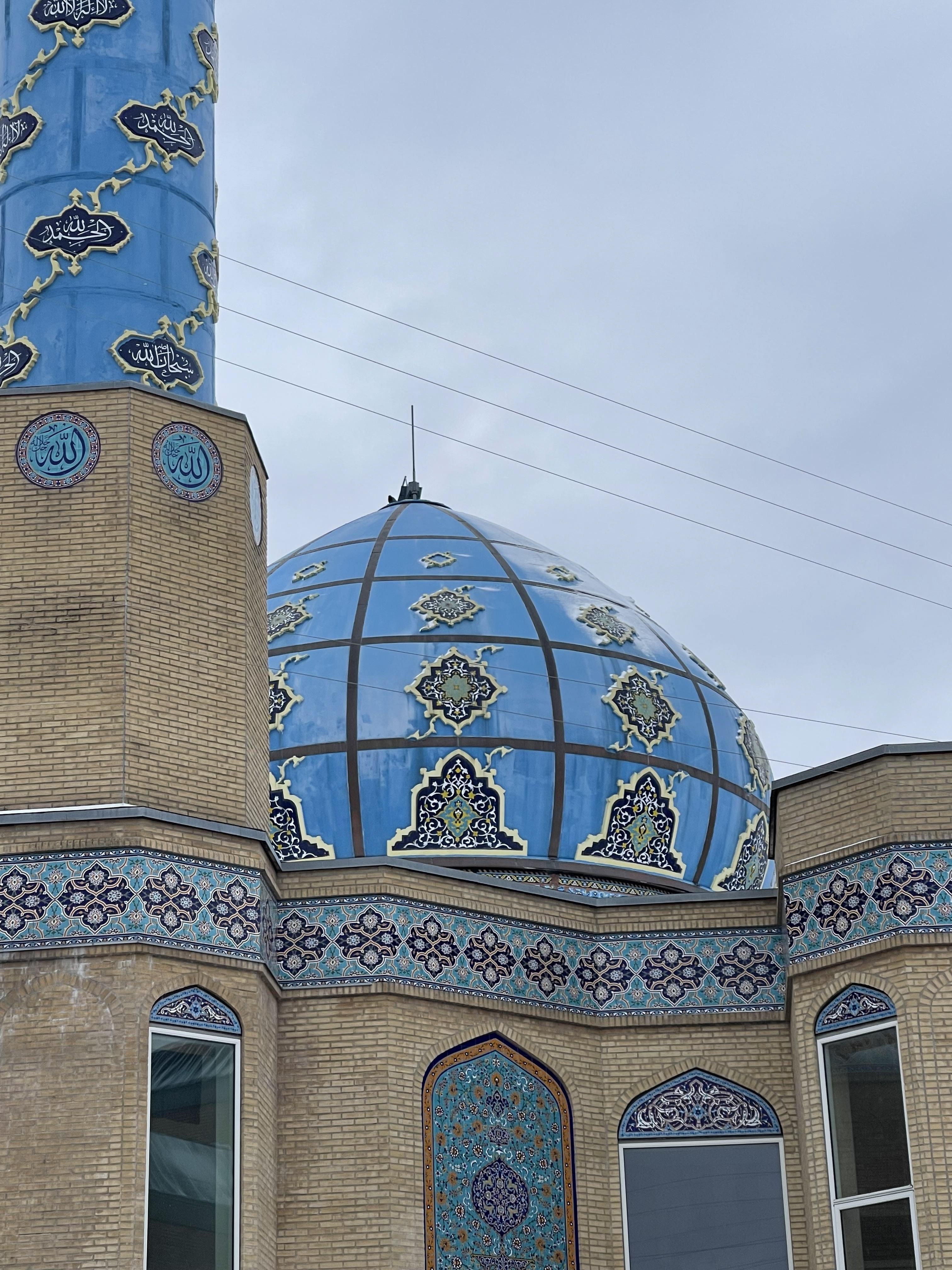
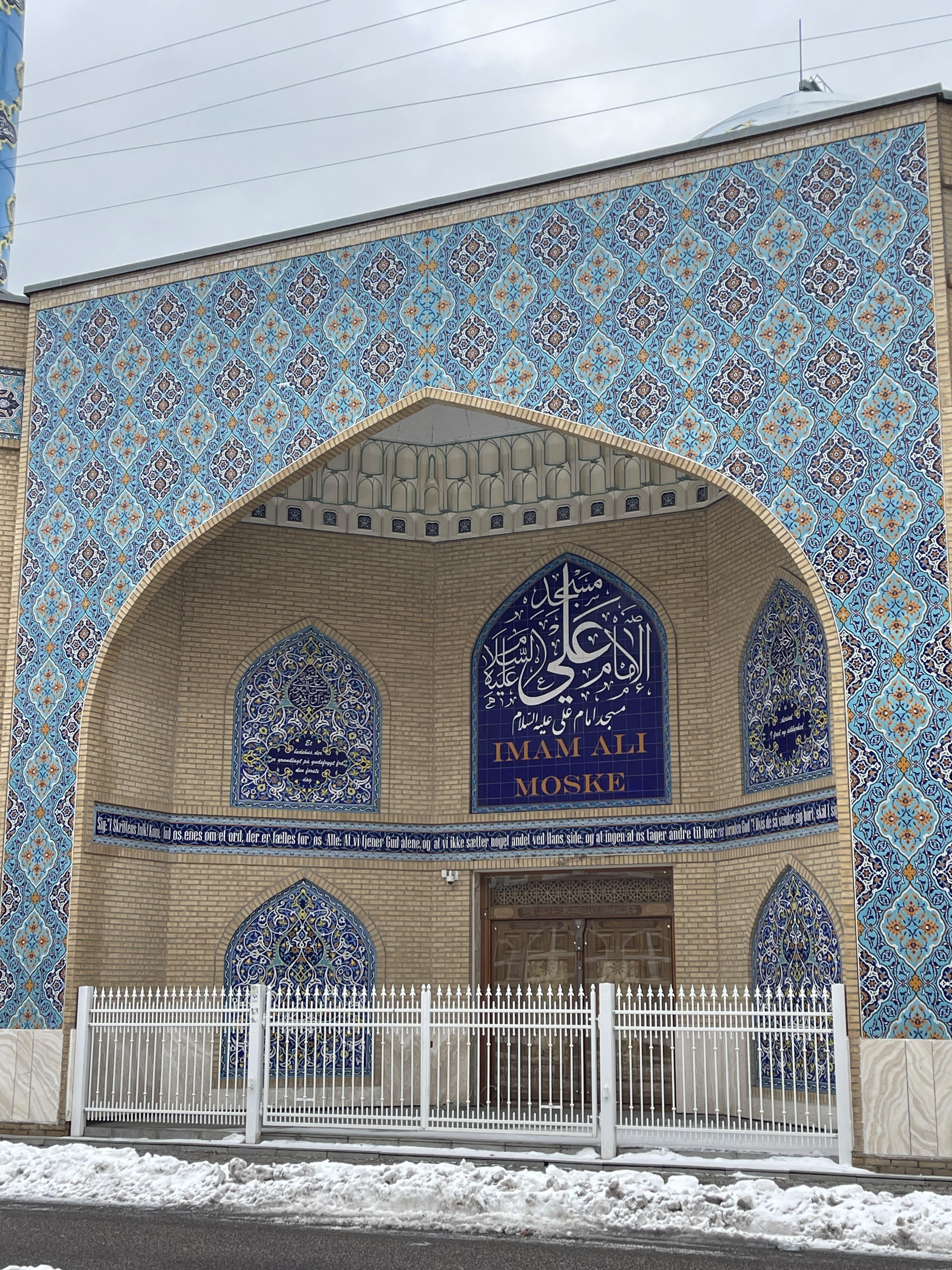
The neighbourhood mapped first — churches, mosques, parks, cafés, the library — before the Imam Ali Mosque was chosen for its geometry and its recognisability. Then photographed in winter: wide, then close on the tilework, the dome, the minarets. Understanding how the building is actually put together before deciding how to reduce it.
.
Sketches
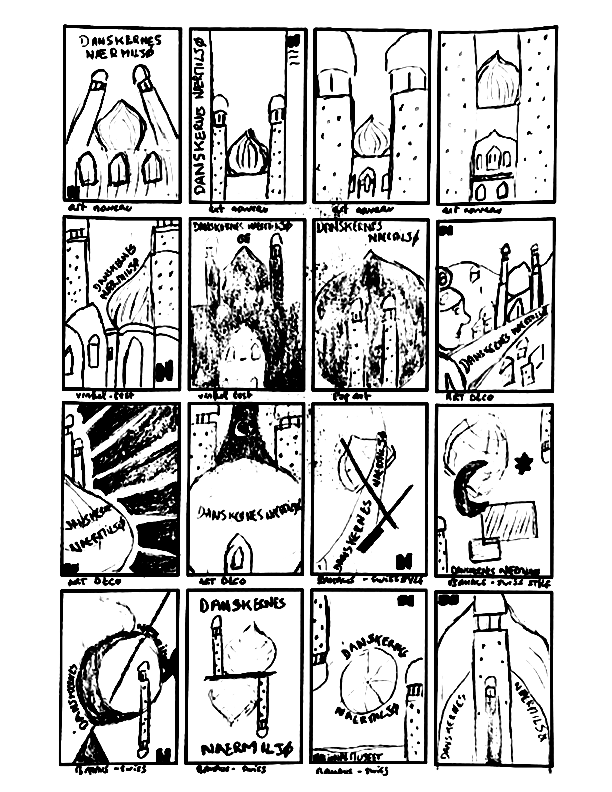
The early sheets circle two incompatible routes. One decorative — Art Nouveau, Art Deco — closer to the building's own ornament and instantly recognisable. One abstract, reducing to geometry and symbol. The sketches record the indecision honestly. Abstraction won on two grounds: the ornament and Arabic script belong to a culture I'm not part of, and a photoreal vector render was beyond what the time allowed.
Final layout
Crescent, star and two minarets, flat and frontal, in primary colour against a warm ground. Title above, museum details along the base. The reduction is deliberate — enough to identify the building, not enough to speak for the people inside it.